
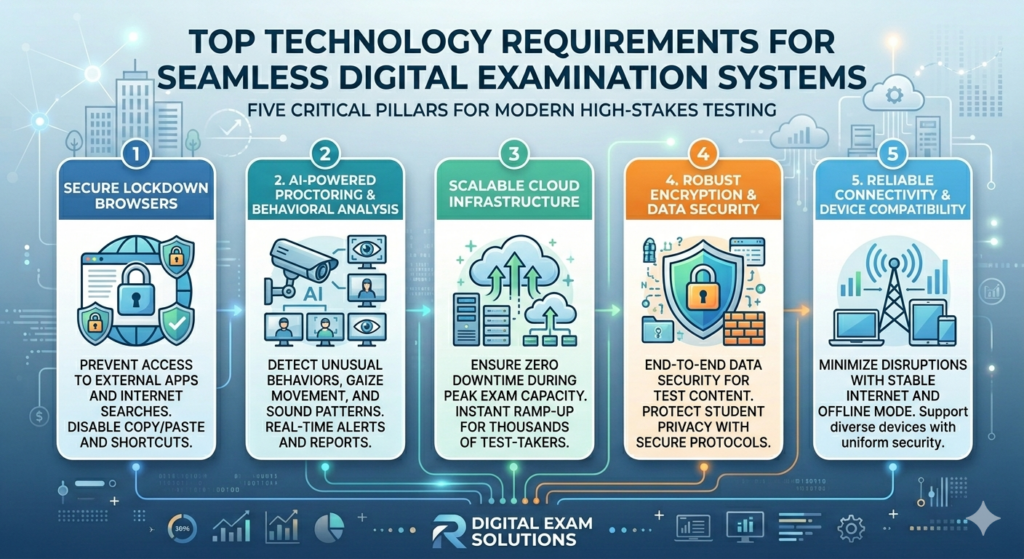
The education and assessment landscape has undergone a significant transformation with the increasing adoption of digital examinations. Institutions, universities, certification bodies, and government agencies are shifting from traditional paper-based exams to computer-based testing systems. This change has been driven by the need for efficiency, accuracy, faster evaluation, and improved examination security.
Digital examinations rely heavily on well-planned technology infrastructure. Unlike conventional exams, where a classroom and printed papers are sufficient, computer-based testing environments require carefully coordinated hardware, software, and network systems. A successful digital exam setup ensures that every candidate can access the exam platform smoothly while maintaining strict security and reliability standards.
For organizations planning to implement or expand digital examination systems, understanding the required technology infrastructure is essential. From computing devices and network connectivity to monitoring tools and technical support, each component plays a critical role in ensuring that the examination process runs smoothly and securely.
This blog explores the key technology infrastructure needed for digital examinations and how organizations can build reliable environments that support large-scale computer-based assessments.
The Growing Importance of Digital Examination Systems
Educational institutions and professional certification bodies are increasingly adopting digital testing platforms to conduct assessments in a more efficient and streamlined manner. Computer-based examinations offer significant advantages over traditional methods, such as faster result processing, automated evaluation, reduced administrative workload, and an enhanced candidate experience. Additionally, integrating tools like a biometric attendance system helps ensure accurate candidate verification and prevents impersonation, adding an extra layer of reliability to the examination process.
Digital examinations also enable institutions to conduct tests across multiple locations simultaneously, making them ideal for national-level entrance exams, recruitment drives, and large-scale certification programs involving thousands of candidates. This flexibility allows organizations to expand their reach while maintaining consistency in the evaluation process.
However, the effectiveness of digital examination systems depends largely on a strong and dependable technology infrastructure. Any technical disruption during an exam can negatively impact candidate performance and undermine the credibility of the assessment. Therefore, it is essential for organizations to invest in robust digital exam infrastructure that ensures stability, security, scalability, and seamless integration of advanced technologies like biometric authentication systems.
Candidate Computing Devices
The most fundamental component of any digital examination setup is the computing device used by candidates. Each participant requires a computer or laptop capable of running the examination software without delays or interruptions.
These systems must meet certain performance standards to ensure that the exam interface loads quickly and operates smoothly. Devices typically require sufficient processing power, adequate memory, and reliable storage to support examination applications.
Uniform device configuration is also important for maintaining fairness. When all candidates use systems with similar specifications, the examination experience remains consistent across the testing environment.
Before deployment, candidate devices should be configured with the required examination software and security settings. This preparation ensures that candidates can focus on completing the exam without encountering technical difficulties.
Reliable Network Connectivity
Network connectivity plays a vital role in the smooth functioning of digital examination systems. Many computer-based exams depend on centralized servers to store question papers and collect candidate responses, making a stable and reliable network essential for uninterrupted communication between candidate devices and the server during the exam.
High-speed internet connectivity helps eliminate delays while loading questions or submitting answers, ensuring a seamless experience for candidates. The network infrastructure must also be capable of handling multiple simultaneous connections without any drop in performance. To safeguard against unexpected power disruptions that could affect network equipment, institutions often rely on solutions like rental UPS systems to maintain continuous operation during examinations.
In large examination centers, local area networks are commonly deployed to connect candidate systems with administrative servers. A well-planned network design ensures efficient data transmission and significantly reduces the chances of connectivity issues. Additionally, having backup connectivity options in place is highly recommended, allowing examinations to continue smoothly even if the primary network faces interruptions.
Secure Examination Software
The software platform used for digital examinations is another essential component of the technology infrastructure. Examination software manages the entire testing process, from displaying questions and recording answers to submitting responses for evaluation.
Modern exam software includes features designed to enhance security and fairness. These features may include randomized question sequences, timed assessments, automatic submission of answers, and controlled navigation between sections.
Security settings are particularly important in digital exam environments. Candidates should not be able to access unauthorized applications, internet browsers, or external resources during the exam. Secure exam software restricts system functionality to ensure that participants interact only with the testing interface.
Proper testing and configuration of the software before the examination day are essential to ensure a smooth candidate experience.
Server Infrastructure and Data Management
Behind every digital examination platform is a server system responsible for managing exam content and storing candidate responses. These servers play a critical role in ensuring that examination data is processed efficiently and securely.
Servers must have sufficient capacity to handle large numbers of candidate connections simultaneously. High-performance servers reduce the risk of delays or system crashes during peak usage periods.
Data management is another key consideration. Candidate responses must be stored securely to prevent data loss or unauthorized access. Regular data backups and secure storage practices help protect examination records.
In large-scale examination environments, distributed server systems may be used to manage data across multiple locations, ensuring reliability and performance throughout the exam process.
Power Backup and Hardware Reliability
Power reliability is often overlooked when planning digital examination infrastructure, yet it is one of the most critical factors in ensuring a successful exam. Power interruptions can disrupt exams and create unnecessary stress for candidates.
To prevent such issues, examination centers should be equipped with power backup systems such as uninterrupted power supplies and generators. These systems ensure that computers, networking equipment, and servers continue to operate even during electrical outages.
Hardware reliability is equally important. All devices used in the exam environment should undergo testing before deployment to ensure that they function properly. Regular maintenance and performance checks help reduce the risk of unexpected hardware failures.
Monitoring and Surveillance Systems
Maintaining exam integrity is a top priority for institutions conducting digital assessments. Monitoring and surveillance systems play a critical role in ensuring that candidates adhere to examination rules and in preventing any form of unfair practices.
Cameras installed in examination centers enable invigilators to closely observe candidate behavior throughout the exam. Many institutions also opt for rental surveillance solutions, which provide flexible and cost-effective access to advanced monitoring equipment without the need for permanent investment. In some cases, these systems are equipped with intelligent features that can detect suspicious activities or irregular patterns during the test.
Beyond physical monitoring, digital surveillance tools help track system usage and identify any unauthorized actions on candidate devices. Together, these technologies create a controlled, secure, and transparent examination environment.
Implementing effective monitoring systems not only strengthens exam security but also builds trust in the digital examination process, helping institutions maintain their credibility and reputation.
Technical Support and On-Site Assistance
Even with careful planning, technical issues may occasionally arise during digital examinations. Having trained technical support staff available on-site ensures that any problems are addressed promptly, minimizing disruption to the exam process.
Support teams play a crucial role in handling device troubleshooting, resolving network issues, and managing software configurations. Their quick response helps maintain a smooth and uninterrupted examination experience for candidates. Alongside technical readiness, many institutions also implement frisking services at entry points to ensure candidates do not carry unauthorized items, further strengthening the overall integrity of the examination process.
Technical support staff are also involved in pre-exam preparations, including device setup, software installation, and system testing. Their expertise ensures that the entire examination environment is fully prepared and secure before candidates arrive, contributing to a seamless and well-managed digital assessment experience.
How Computer Junction Supports Digital Examination Infrastructure
Computer Junction has built a strong reputation as a reliable provider of IT equipment and infrastructure solutions for organizations across multiple sectors. The company’s expertise in delivering dependable technology makes it a valuable partner for institutions conducting digital examinations.
Computer Junction provides high-quality computing devices and supporting equipment for rent that can be configured to meet the specific requirements of examination environments. Each system is thoroughly tested before deployment to ensure stable performance during testing sessions.
One of the company’s key strengths is its ability to deliver technology solutions quickly and efficiently. Examination authorities often require large numbers of devices within tight timelines, and Computer Junction’s operational capabilities help meet these demands.
In addition to providing hardware, the company focuses on ensuring that systems are properly configured and ready for use. This attention to preparation helps institutions avoid technical complications during exams.
With its commitment to quality, reliability, and responsive support, Computer Junction enables educational institutions and testing organizations to build secure and efficient digital examination environments.

I am an accomplished author and marketing professional with strong expertise in brand promotion and digital transformation. helping businesses build powerful brand identities and expand their presence through strategic digital marketing initiatives. With hands-on experience in modern marketing tools and business digitalization.


